Fresh air is fuel for both you and your car. One filter keeps dust and debris out of the engine, the other cleans the air you breathe in the cabin. When either one gets clogged, performance and comfort slip. Staying on top of both filters is an easy way to protect your engine, your HVAC system, and your health.
Why Engine and Cabin Filters Are So Important
Your engine air filter screens dirt before it reaches the intake and mass airflow sensor. A clean filter helps the engine meter fuel correctly, which supports smooth power, reliable starting, and good mileage. The cabin air filter traps pollen, dust, and road soot before the blower fan pushes air through the vents. Keep both fresh, and you get quieter airflow, fewer smells, and less strain on the blower motor.
Recommended Intervals, With Real-World Adjustments
Most owners will benefit from an engine air filter change about every 15,000 to 30,000 miles. If you drive on dusty roads, sit in traffic often, or notice a drop in fuel economy, you may need it sooner. Cabin air filters usually last 12 months or 12,000 to 20,000 miles, depending on air quality and how often you use heat and A/C. Seasonal pollen, wildfire smoke, or frequent short trips can shorten that window.
Clues Your Engine Air Filter Is Due
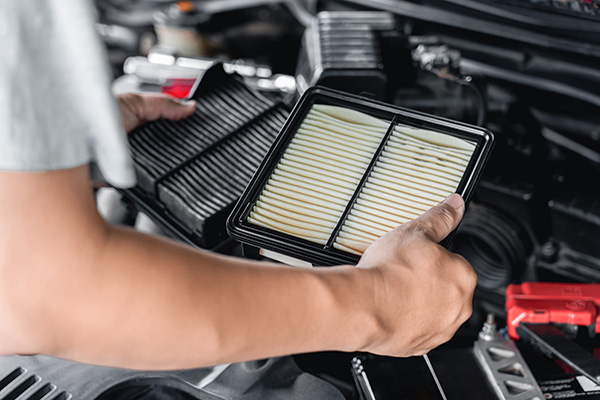
If the engine needs more throttle than usual to get up to speed, or the idle feels a bit rough on cold mornings, a restricted filter may be the cause. You might also notice a small decline in fuel economy, especially around town. During a quick inspection, look for a filter that appears dark, has leaves or grit in the pleats, or shows oily residue. If the pleats no longer hold their shape, the media is tired and should be replaced.
Clues Your Cabin Air Filter Is Overloaded
A musty smell when you start the fan, weak airflow even on higher settings, or haze on the inside of the windshield are common signs. Allergies flaring during commutes can also hint that the cabin filter is saturated. If you remove it and see gray, matted pleats with leaf fragments or soot, it is time for a fresh one. Restoring clean airflow often makes the HVAC system quieter and helps the defroster clear glass faster.
Paper vs. High-Efficiency and Charcoal Options
Standard paper engine filters work well for most driving and protect sensors from fine dust. Higher efficiency versions can catch smaller particles, which is helpful on gravel roads or during construction season. For cabin filters, an activated charcoal layer can reduce odors and some gas-phase pollutants from traffic. If you regularly park near busy roads or encounter smoke and strong smells, the charcoal style is a smart upgrade.
DIY Checks You Can Do at Home
You can inspect both filters with basic tools. The engine air filter usually sits in a plastic box near the intake snorkel. Open the clips or screws, lift the cover, and note the filter orientation before removal. The cabin filter typically lives behind the glove box or under the cowl at the base of the windshield. If access looks tight or the glove box requires careful removal, it is reasonable to leave the job to a technician to avoid broken tabs or misaligned doors.
Make Filter Changes Part of a Simple Routine
Tie engine filter checks to your regular oil service so you see it at consistent mileage intervals. Revisit the cabin filter with the seasons, especially as fall leaves accumulate or spring pollen picks up. If your car has a service reminder, use that as a prompt to inspect rather than wait for a warning light that will never appear for filters. Keeping a note in your maintenance log helps you avoid guesswork and keeps airflow predictable all year.
Breathe Easy With Complete Automotive in Springfield, MO
If you are unsure about intervals or access, we can help. Our technicians check both filters, measure airflow, and install quality replacements that match your driving needs, including charcoal cabin filters for cleaner ventilation.
Stop by either Complete Automotive location in Springfield, MO, and we will keep your engine protected and your cabin air fresh with quick, professional service.