Posted on 9/25/2026
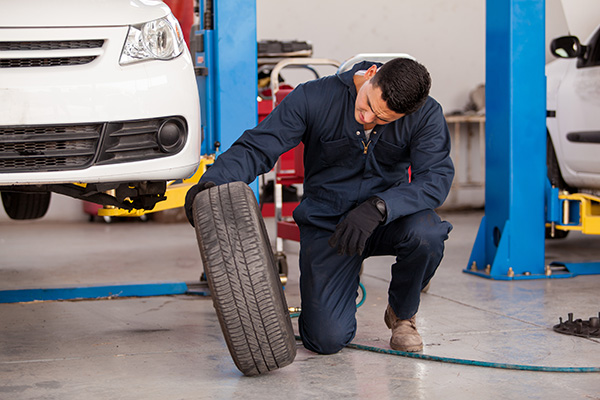
Tire rotation sounds like one of the simplest services on a maintenance schedule, so it is easy to treat it as optional. The tires still have tread, the car drives normally, and no warning light tells you they need to be moved from one position to another. The problem is that tires don't wear evenly when they stay in the same spot. Steering, braking, vehicle weight, drivetrain layout, and alignment all place different loads on each tire. Rotating them at the right intervals helps spread that wear across the entire set instead of letting two tires wear out long before the others. Front Tires Usually Work Harder Than Rear Tires On most passenger vehicles, the front tires handle the steering and a large share of the braking force. Front-wheel-drive vehicles also send engine power through those same tires, adding another job to the list. That extra workload can wear the front tread noticeably faster than the rear. If you never rotate the tires, you can end up repla ... read more
Posted on 8/28/2026

A tire can lose air even when no nail, screw, or obvious puncture is visible. Air can escape through the valve stem, around the wheel bead, through corrosion on the rim, from a cracked wheel, or through damage that is too small to see without testing. Temperature changes can also lower the pressure in all four tires, but repeated loss from the same tire points toward a leak. The correct repair starts by locating exactly where the air is escaping instead of adding air every few days and hoping the problem remains minor. A Leaking Valve Stem The valve stem is the small fitting used to inflate the tire. Rubber valve stems can crack near the base, harden with age, or become damaged when an air hose is pulled sideways. Metal valve stems can leak around their seals, retaining nuts, or tire pressure monitoring sensor components. The valve core inside the stem can also loosen or fail to seal. A leaking core may release air slowly enough that the tire takes several days or ... read more
Posted on 7/31/2026
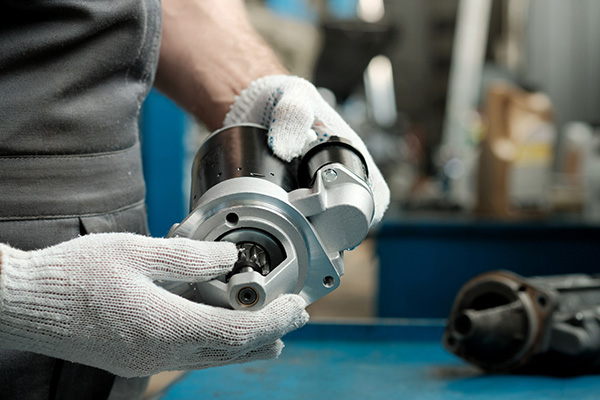
Intermittent starting problems can be more frustrating than a vehicle that simply refuses to start. One morning, the engine fires right up. The next day, it cranks slowly, takes several tries, or acts like it barely wants to turn over. Then, just when you are ready to schedule service, it starts normally again. That back-and-forth behavior does not mean the problem disappeared. Starting problems often appear first under certain conditions, such as cold mornings, hot restarts, short trips, low voltage, low fuel pressure, or worn ignition parts. The pattern can help point the inspection in the right direction. A Weak Battery Can Act Fine Sometimes A weak battery does not always fail at once. It may have enough power to start the vehicle one day, then struggle the next morning after a cold night or several short trips. Batteries are affected by age, temperature, driving habits, and the health of the charging system. Slow cranking, clicking, dim lights, or warning mess ... read more
Posted on 6/26/2026
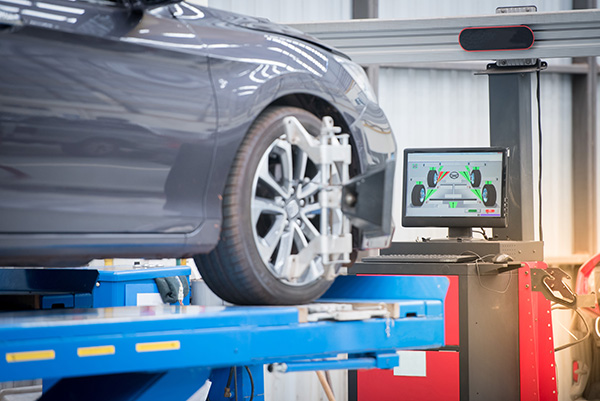
Wheel alignment is not something drivers always think about after an auto repair. The car goes into the shop for suspension work, steering parts, tires, or damage repair, and the main concern is getting that problem fixed. Once the repair is done, though, the wheels still need to point in the right direction. Some repairs can change the position of parts that control the tire angle. Even a small change can affect steering feel, tire wear, and how straight the vehicle tracks. That is why alignment should be part of the plan after certain repairs, not treated as an afterthought later. Suspension Repairs Can Change Wheel Angles Suspension parts help hold the wheels in the correct position while the vehicle moves, turns, and absorbs bumps. When parts like control arms, ball joints, struts, shocks, bushings, or knuckles are replaced, the wheel angle can change. The repair may be done correctly and still leave the alignment out of spec. That does not mean the repair caus ... read more
Posted on 5/29/2026
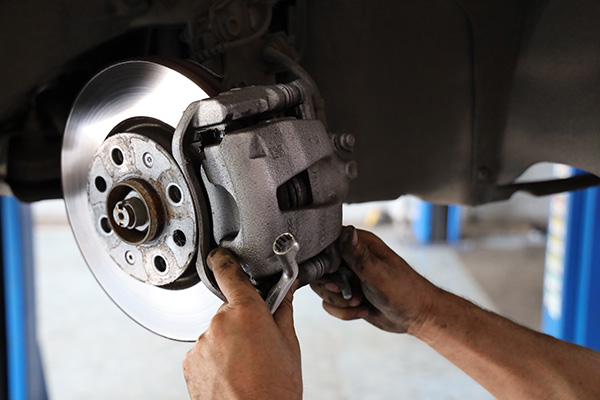
Brake problems are not always loud or sudden. Sometimes the first sign is a small change in the pedal, a little noise at a stop sign, or a vibration that only shows up at higher speeds. Since the vehicle still stops, it can be tempting to keep driving and deal with it later. That is where brake wear gets more expensive. The sooner you recognize the warning signs, the better your chance of keeping the repair focused, rather than letting worn parts damage other parts around them. 1. Squeaking Or Grinding When You Brake Brake noise is one of the most common signs that the system needs attention. A light squeak can come from pad wear, brake dust, hardware movement, or moisture, but it should not be ignored if it keeps coming back. The sound is the vehicle’s way of telling you something has changed at the wheels. Grinding is more serious. That can mean the brake pads are worn down far enough that metal is contacting the rotor. Once that happens, the repair can mov ... read more
Posted on 4/30/2026
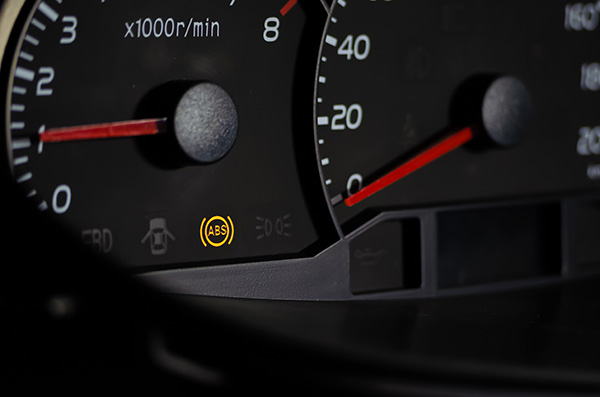
ABS and traction control are easy to take for granted because most drivers do not feel them working every day. The car starts, stops, and handles normally, so those systems stay out of mind until a warning light appears or the vehicle reacts differently on a wet road. That is when the concern starts. If both systems stop working the way they should, the car does not instantly become impossible to drive, but it does lose part of the backup control it was built to give you. Why These Systems Are Connected ABS and traction control do different jobs, but they rely on much of the same information. ABS helps keep the wheels from locking during hard braking. Traction control helps reduce wheelspin when the tires lose grip during acceleration. Both systems depend on wheel speed sensors, control modules, wiring, and hydraulic or electronic communication to work correctly. That ... read more
Posted on 3/27/2026
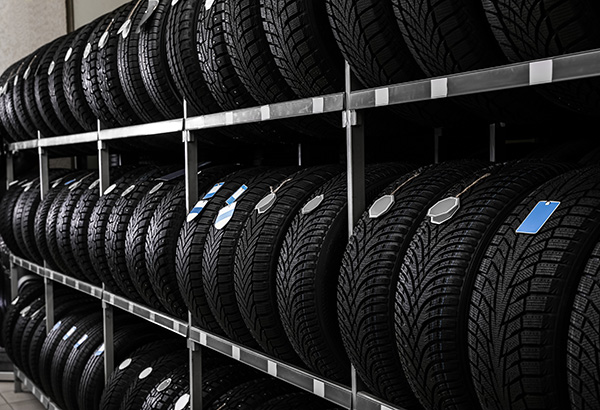
Tires rarely fail in a neat, obvious way. They wear, age, and pick up damage in small steps, so it is easy to keep putting the decision off. If you are trying to decide whether it is time, focus on signs that affect grip and safety first, not just what the tread looks like from five feet away. These seven checks give you a clear answer without turning it into a guessing game. Sign 1. Tread Is Low Where It Counts Low tread shows up in wet traction before it shows up in dry driving. When the grooves get shallow, the tire cannot move water as well. Braking and lane changes in rain start to feel less predictable. Check the inner edge, center, and outer edge of the tire, not just the middle. If one area is close to the wear bars, that tire is already losing margin. It is also a hint that alignment or inflation may have been off long enough to shape the wear. Sign 2. Cracks And Dry Rot Are Spreading Rubber ages even when miles are low. Heat, sunlight ... read more
Posted on 2/27/2026
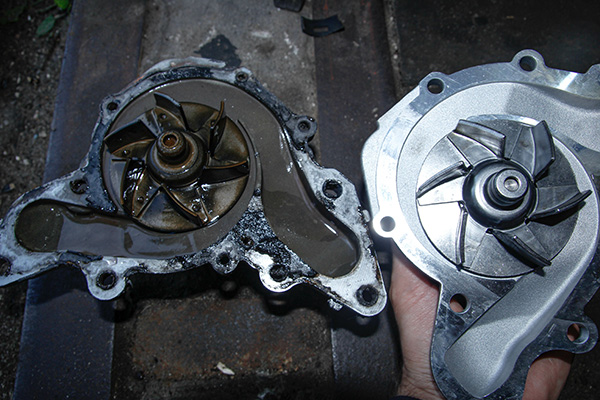
The water pump does its job quietly under the hood, which is why the early signs can be easy to shrug off. You might notice a faint coolant smell after a drive, a small damp spot under the front of the vehicle, or the temperature gauge sitting a touch higher than you remember. The problem is that a weak water pump does not improve on its own. If it is starting to fail, it tends to move from mild symptoms to overheating faster than most drivers expect. What The Water Pump Does For Engine Cooling The water pump circulates coolant through the engine and radiator, so heat is carried away evenly. When flow is steady, the engine stays in a narrow, safe temperature range, whether you are cruising on the highway or creeping through traffic. If the flow drops, the cooling system loses stability. Coolant can move too slowly through hot areas, and that is when temperature spikes and uneven heating start showing up. Early Signs A Water Pump May Be Going Bad ... read more
Posted on 1/30/2026
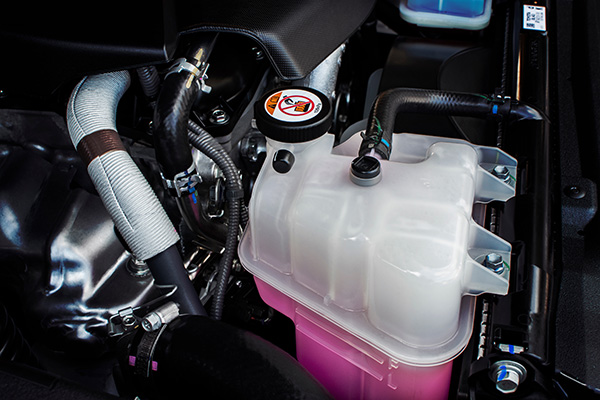
Most drivers are pretty good about oil changes, and at least aware of brakes and tires. Coolant is the one that gets ignored because it usually stays quiet. No squeal, no shake, no obvious warning until the day the temperature gauge climbs and your stomach drops with it. We’ve seen a lot of cooling systems that could’ve been saved with one routine service, but instead they waited until the car made the decision for them. Why Coolant Gets Skipped Until It Becomes A Problem Coolant doesn’t “run out” like fuel, so it’s easy to assume it lasts forever. The reality is that coolant is a chemical mix that ages. Over time, it loses corrosion protection, its pH changes, and it can start leaving deposits in places you really want to keep clean. A lot of people also confuse topping off with maintenance. Adding a little coolant may help the level, but it doesn’t refresh the additives that protect the radiator, heater core, water pump ... read more