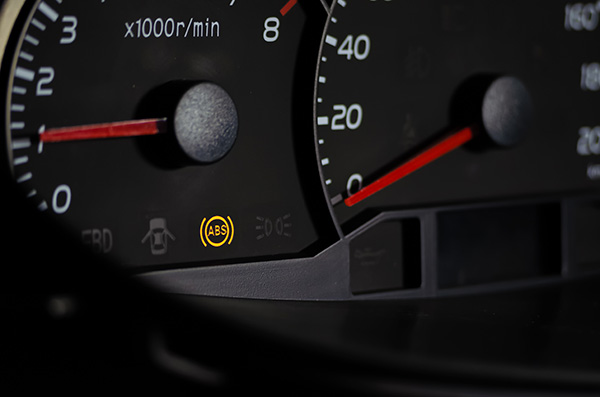
ABS and traction control are easy to take for granted because most drivers do not feel them working every day. The car starts, stops, and handles normally, so those systems stay out of mind until a warning light appears or the vehicle reacts differently on a wet road.
That is when the concern starts. If both systems stop working the way they should, the car does not instantly become impossible to drive, but it does lose part of the backup control it was built to give you.
Why These Systems Are Connected
ABS and traction control do different jobs, but they rely on much of the same information. ABS helps keep the wheels from locking during hard braking. Traction control helps reduce wheelspin when the tires lose grip during acceleration. Both systems depend on wheel speed sensors, control modules, wiring, and hydraulic or electronic communication to work correctly.
That shared setup is why a single problem can affect both systems simultaneously. A fault in one area can trigger multiple warnings and leave the driver wondering whether the issue is minor or something much more serious.
What Drivers Usually Notice First
In many cases, the first clue is a warning light. The ABS light may come on by itself, or the traction control light may show up with it. Some drivers also notice the stability control light or a brake-related message on the dashboard. At first, the car can still feel mostly normal during calm daily driving.
That is what makes this problem easy to delay. The warnings are there, but the brakes still work, and the car still moves. The difference tends to show up when road conditions get worse or when the driver has to react quickly.
How The Car Can Change On The Road
When ABS is not working properly, the car can lose its ability to pulse the brakes during a hard stop. That means wheel lock becomes more likely on slick pavement, gravel, or during panic braking. When traction control is not working correctly, the drive wheels can spin more easily during takeoff, especially in rain or on loose surfaces.
The car can still be driven, but it no longer provides the same level of help when grip disappears. That can make the vehicle feel less settled in the exact moments when control matters most.
Common Causes Behind The Problem
A few faults show up again and again when ABS and traction control stop working properly:
- Failed wheel speed sensors
- Damaged sensor wiring
- Low brake fluid
- ABS module faults
- Hydraulic unit problems
- Corrosion or debris around sensor areas
Wheel speed sensors are high on that list for a reason. They live in a harsh environment and are exposed to road grime, moisture, and heat whenever the vehicle is driven. Once one starts sending bad information, both systems can lose confidence in what the wheels are doing.
Why The Brakes Can Still Feel Normal At First
Many drivers get confused because the brake pedal still feels normal in regular driving. That happens because the basic braking system and the ABS system are not identical. The base brakes can still stop the vehicle, even when the anti-lock system is shut down or limited.
That does not mean the problem is minor. It means the missing help only becomes more obvious when the road is slick, the stop is harder, or the vehicle needs to stay more stable under pressure.
When You Should Stop Driving And Get It Checked
A steady ABS or traction control light does not always mean the car has to be parked immediately, but it does mean service should move up your list. If the warning is accompanied by a red brake light, a soft pedal, poor braking response, or a clear change in how the car behaves during stops, the issue becomes much more urgent.
An inspection is the smartest next step because braking and traction complaints are too important to guess at. If the vehicle feels unstable, pulls during braking, or loses grip much more easily than before, it should be looked at right away.
Why Early Repair Saves Money
ABS and traction control faults are easy to misread from the driver’s seat. One bad sensor can look like a bigger system failure, while a hydraulic problem can look like a simple warning light issue. Replacing parts blindly is how a manageable repair turns into a frustrating one.
That is where regular maintenance helps. A shop can catch low fluid, damaged wiring, worn brake parts, and sensor trouble earlier, before the warning lights stack up and the diagnosis becomes more expensive than it needed to be.
Get ABS And Traction Control Repair In Missouri, With Complete Automotive
If your ABS light, traction control light, or brake warning light has come on, Complete Automotive can inspect the system and help you determine whether the problem is a sensor fault, a module issue, a brake fluid concern, or something deeper in the braking system.
With two locations serving drivers in Missouri, Complete Automotive can help you get the issue checked before reduced control turns into a bigger safety problem.