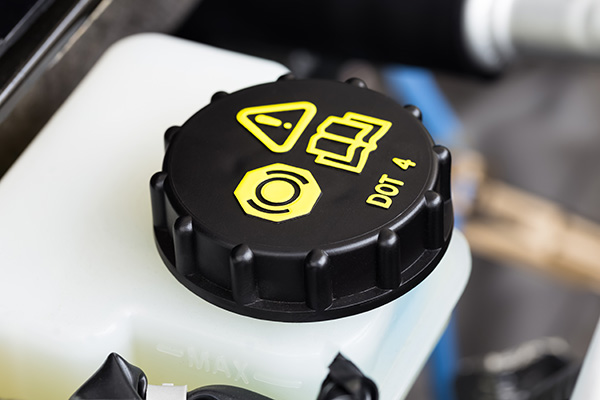
Your brakes can feel perfectly normal on a short drive, then act differently after repeated stops or a long descent. Worn pads are one possible reason, but the fluid carrying pressure through the brake system deserves attention too. When was it last replaced?
Brake fluid ages even when the reservoir looks full. It absorbs moisture and gradually degrades, which can reduce its ability to handle heat and protect the parts inside the system. That's why brake fluid has its own service schedule, separate from how much pad material you have left.
Brake Fluid Transfers Pressure Through The Brake System
When you press the pedal, the master cylinder builds hydraulic pressure. Brake fluid carries that pressure through lines and hoses to the brakes at each wheel. The whole system counts on the fluid staying in good shape and on its components holding pressure without leaks.
The fluid doesn't create the friction that slows your wheels. The pads and rotors do that. But the two halves of the system have to work together. Great pad thickness can't fix a hydraulic problem, and fresh fluid can't fix a damaged rotor or a sticking caliper. A good inspection looks at the whole braking concern.
Moisture Lowers Brake Fluid’s Resistance To Boiling
The glycol-based brake fluids in most passenger vehicles absorb moisture over time, and that moisture lowers the fluid's boiling point. Normal braking makes heat. Repeated hard stops or a long downhill drag can push temperatures high enough to expose fluid that has lost some of its heat resistance.
If the fluid boils, vapor can form in the hydraulic system. Vapor compresses far more easily than liquid, so your pedal movement squeezes bubbles instead of sending pressure to the wheels. The pedal can feel soft or sink farther, and braking performance can drop. Just because the brakes felt fine earlier doesn't make that change safe.
Old Brake Fluid Can Affect Internal Brake Parts
Moisture and fading corrosion protection can contribute to deterioration inside metal brake components. Think of the master cylinder, the caliper passages, and parts of the hydraulic control unit - all places you can't see from outside. The damage can build slowly while the outside of the system looks relatively clean.
Replacing the fluid helps keep good fluid throughout the system, but it won't repair corrosion or a component that already sticks or leaks. If a caliper doesn't release properly or the pedal can't hold pressure, that mechanical or hydraulic fault needs its own repair. Service should address what we actually find, not assume new fluid will solve every symptom.
ABS Components Also Depend On Suitable Brake Fluid
Anti-lock braking systems use valves and a pump to manage pressure in certain braking situations. Those passages need the correct fluid specification and a properly serviced hydraulic circuit. Some vehicles also call for a specific bleeding sequence or special equipment to operate the valves during service.
An ABS warning doesn't automatically mean the fluid is old. Wheel-speed sensors, wiring, and other components can be involved too. By the same token, new fluid won't clear every brake-system warning on its own. We need to check the stored information and the actual components so the service matches the reason the warning came on.
Brake Fluid Symptoms Need To Be Taken Seriously
A soft pedal, extra pedal travel, weaker braking after repeated stops, or fluid that keeps disappearing deserves prompt attention. Boiling fluid, air, leaks, and failed components can all cause these symptoms. And you can't pin down the cause by peeking at the reservoir or pumping the pedal a few times.
Stop safely and arrange assistance if you notice:
- A pedal that sinks or gives you very little braking response.
- A sudden, major change in stopping ability.
- A brake warning along with fluid loss or an abnormal pedal.
Don't keep driving to see whether the brakes recover after they cool down. A temporary return to normal doesn't explain what went wrong in the first place.
Brake Fluid Replacement Follows A Separate Service Schedule
Check your manufacturer's time interval and service instructions. Brake fluid can come due before the pads need replacing, and new pads don't restart the fluid's clock. If your records are missing, talk with the shop about the fluid's condition and the right schedule.
Testing can help you decide when the method suits the fluid and the vehicle, but color alone doesn't tell you how much moisture is in there or how well it resists boiling. A reservoir top-off also leaves most of the old fluid sitting in the lines and wheel circuits. A proper replacement follows the specified process to exchange the fluid and remove air where required.
Correct Brake Fluid Is Part Of A Complete Brake Service
Use the specification your vehicle calls for, including any low-viscosity requirement for its control system. Brake fluids aren't all interchangeable, and silicone-based DOT 5 shouldn't be casually mixed into a system built for glycol-based fluid. The biggest number on the bottle isn't automatically the right choice.
Ask what the service includes and whether any leaks or damaged parts need repair first. Opening or replacing hydraulic components may also require bleeding, even when the full fluid interval isn't due. A clear explanation should connect the fluid work to your vehicle's requirements and to what we found during the inspection.
Get Brake Fluid Service In Springfield, MO, With Complete Automotive
Complete Automotive serves drivers at two locations in Springfield, MO. If brake fluid service is due or your pedal feel has changed, we can inspect the braking system and explain the fluid and repair work your vehicle needs.
Contact us to schedule a brake inspection and review your brake fluid service history.