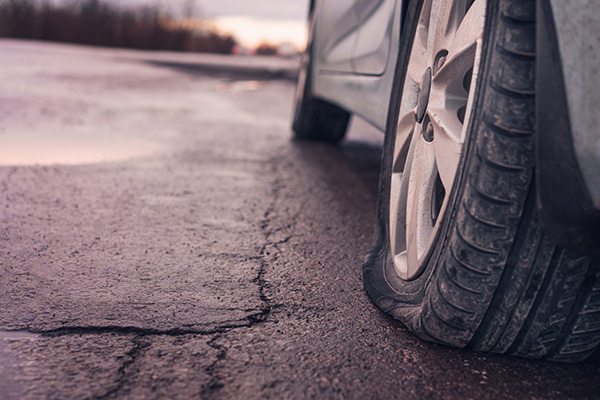
A tire can lose air even when no nail, screw, or obvious puncture is visible. Air can escape through the valve stem, around the wheel bead, through corrosion on the rim, from a cracked wheel, or through damage that is too small to see without testing.
Temperature changes can also lower the pressure in all four tires, but repeated loss from the same tire points toward a leak. The correct repair starts by locating exactly where the air is escaping instead of adding air every few days and hoping the problem remains minor.
A Leaking Valve Stem
The valve stem is the small fitting used to inflate the tire. Rubber valve stems can crack near the base, harden with age, or become damaged when an air hose is pulled sideways. Metal valve stems can leak around their seals, retaining nuts, or tire pressure monitoring sensor components.
The valve core inside the stem can also loosen or fail to seal. A leaking core may release air slowly enough that the tire takes several days or weeks to trigger a low-pressure warning.
Technicians test the valve core and the base of the stem with leak-detection solution. If bubbles form, the faulty valve component can be replaced. Vehicles with tire pressure monitoring sensors may require a service kit or a complete sensor when the stem and sensor are built together.
Air Escaping Around The Tire Bead
The tire bead is the reinforced edge that seals against the wheel. Dirt, corrosion, old rubber residue, or slight wheel damage can prevent the bead from sealing evenly.
This problem is common on aluminum wheels exposed to road salt, moisture, and repeated temperature changes. Corrosion can develop under the bead where the tire hides it. The tire may appear undamaged from the outside while air escapes slowly around the rim.
Proper repair requires removing the tire from the wheel, cleaning the bead seating surface, and checking the wheel for pitting or damage. Simply applying sealant from the outside does not correct corrosion trapped beneath the tire.
A Bent Or Cracked Wheel
A wheel can bend after hitting a pothole, curb, or road debris. Even a small change in the bead seating area may prevent the tire from sealing correctly. The driver may also feel vibration, steering pull, or repeated pressure loss after the impact.
Alloy wheels can crack on the inner barrel where the damage is difficult to see while the wheel is installed. Some cracks leak only when the vehicle’s weight flexes the wheel or when the tire is cold.
An inspection of both sides of the wheel is required. Depending on the location and severity of the damage, the wheel may be repairable by a qualified specialist or may need replacement. Structural damage should never be covered with an improvised sealant.
A Puncture Too Small To See
Not every puncture leaves a visible object in the tread. A thin wire, staple, thorn, or small piece of metal may fall out after creating a narrow leak. The opening can partially close when the tire is not under load, making it difficult to locate by sight.
Punctures can also hide between tread blocks or near the shoulder. Leak-detection solution or immersion testing reveals escaping air by producing bubbles at the damaged area.
A repair is appropriate only when the puncture is within the approved tread area, and the internal structure remains undamaged. A tire with sidewall damage, exposed cords, a large puncture, or evidence of being driven while severely underinflated generally requires replacement.
Temperature Changes Lower Tire Pressure
Tire pressure changes with outside temperature. As the air cools, pressure falls. A common guideline is approximately 1 psi for every 10 degrees Fahrenheit of temperature drop.
When cold weather arrives suddenly, several tires may trigger the pressure warning at the same time. This does not necessarily mean each tire has a leak. Pressure should be checked when the tires are cold and adjusted to the value listed on the driver’s door placard.
Temperature does not explain one tire losing several pounds repeatedly while the others remain stable. That pattern still indicates leakage from the tire, wheel, bead, or valve assembly.
Tire Damage From Underinflation
A tire that has been driven with low pressure can suffer internal damage even when the outside still looks acceptable. The sidewall flexes excessively, creating heat that weakens cords and internal bonding.
Signs of damage may include:
- Rubber dust inside the tire
- Wrinkling or discoloration on the inner sidewall
- A visible sidewall ring
- Bulging
- Separated internal material
- Vibration after reinflation
The tire must be removed from the wheel to inspect the interior properly. Adding air does not restore internal strength once the structure has been damaged.
Why Tire Sealant Is Not A Permanent Repair
Emergency aerosol sealants and inflator kits may temporarily slow a small tread leak, but they are not permanent repairs. Sealant can spread inside the tire, interfere with pressure sensors, and make the damaged area harder to evaluate.
Tell the technician when sealant has been used. The tire needs to be removed, cleaned, and checked internally before a repair decision is made. A proper tread puncture repair generally seals the injury from inside and fills the puncture channel according to accepted repair procedures.
How Technicians Locate A Slow Leak
Testing begins by measuring pressure and checking the tread, sidewalls, valve stem, and wheel. Leak-detection solution is applied to likely areas, including the valve core and bead. The tire may then be submerged or removed for an internal inspection.
Technicians also check for wheel corrosion, impact damage, previous repairs, and signs of underinflated driving. Regular maintenance should include monthly pressure checks and attention to any tire that repeatedly falls below the recommended setting.
Continuing to drive with low pressure increases heat, tire wear, braking distance, and the chance of structural failure. Repeatedly adding air is not a substitute for finding the leak.
Get Tire Leak Repair At Two Springfield, MO, Locations With Complete Automotive
Complete Automotive serves drivers from two locations in Springfield, MO. Our team can test the valve stem, tire bead, wheel, tread, and internal tire condition to identify the source of repeated air loss.
Contact us to schedule tire service, and follow us on Facebook for shop updates.