Intermittent starting problems can be more frustrating than a vehicle that simply refuses to start. One morning, the engine fires right up. The next day, it cranks slowly, takes several tries, or acts like it barely wants to turn over. Then, just when you are ready to schedule service, it starts normally again.
That back-and-forth behavior does not mean the problem disappeared. Starting problems often appear first under certain conditions, such as cold mornings, hot restarts, short trips, low voltage, low fuel pressure, or worn ignition parts. The pattern can help point the inspection in the right direction.
A Weak Battery Can Act Fine Sometimes
A weak battery does not always fail at once. It may have enough power to start the vehicle one day, then struggle the next morning after a cold night or several short trips. Batteries are affected by age, temperature, driving habits, and the health of the charging system.
Slow cranking, clicking, dim lights, or warning messages can all point to a weak battery. The vehicle may start better after a long drive because the battery had more time to recharge. It may struggle again after sitting overnight.
Battery testing is important because the battery may not be the only issue. A weak alternator, corroded terminals, loose cables, or a poor ground can make a good battery appear weak. Testing the whole starting and charging system gives a clearer answer.
Cable And Connection Problems Can Come And Go
Electrical connections need clean, tight contact to carry power. Battery terminals, ground straps, starter connections, fuse box connections, and charging system wiring can all create intermittent starting problems when corrosion or looseness develops.
A poor connection may work when the vehicle is cool, then act up when heat expands parts. It may behave differently after bumps, moisture, or vibration. That is why the problem can feel random.
Signs of connection trouble can include clicking, slow cranking, lights flickering, the vehicle starting after the cables are moved, or electrical accessories acting strange. A visual check helps, but voltage drop testing is often needed to find resistance hidden inside cables or connections.
The Starter May Be Wearing Out
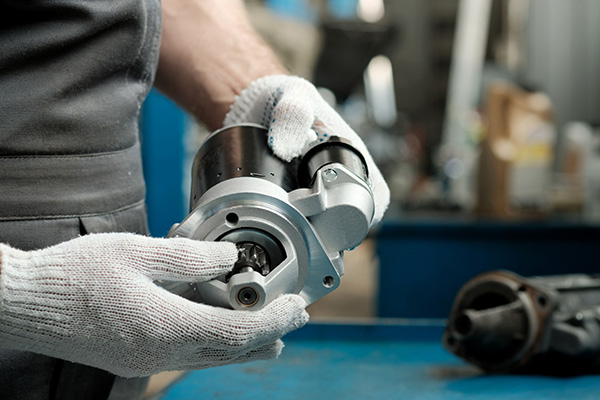
The starter motor has to turn the engine fast enough for it to start. As the starter wears, it may work sometimes and struggle other times. Heat can make starter problems worse, so a vehicle may start fine cold but hesitate after a short stop when the engine bay is hot.
A failing starter may cause a single click, repeated clicking, slow cranking, grinding, or no response when the key is turned. Sometimes tapping or waiting allows it to work again, but that is not a repair.
Starter problems should be confirmed before replacement. Weak battery power and cable resistance can make a starter appear to be the cause even when it is not.
Fuel Pressure May Be Dropping After The Vehicle Sits
Some vehicles struggle to start because fuel pressure does not stay where it should after the engine is shut off. A weak fuel pump, leaking injector, faulty pressure regulator, or check valve issue can allow pressure to bleed down while the vehicle sits.
When that happens, the engine may crank longer than normal before fuel pressure builds again. It may start better if you cycle the key a couple of times before cranking, because the pump has more time to prime the system.
Fuel pressure problems can also show up as hesitation, stalling, rough idle, or weak acceleration. A pressure test can show whether the fuel system is holding pressure and supplying enough fuel during startup.
Ignition Or Sensor Problems Can Be Temperature Sensitive
Ignition coils, spark plugs, crankshaft sensors, camshaft sensors, coolant temperature sensors, and wiring can all affect starting. Some parts fail more often when hot. Others act up in cold or damp conditions.
A crankshaft position sensor, for example, can cause intermittent starting trouble if the engine computer cannot read engine speed correctly. A coolant temperature sensor that sends poor information may cause the engine to receive the wrong fuel mixture during startup. Worn spark plugs can make cold starts harder because the spark is weaker.
These problems may also turn on the check engine light, but not always right away. Codes, live data, and symptom timing help guide the testing.
Pay Attention To The Pattern
The more details you can describe, the easier it is to narrow the cause. Intermittent starting problems need context because the vehicle may behave normally during the appointment.
Helpful details include:
- Does it happen cold or hot?
- Does it crank slowly or crank normally?
- Does it start after several tries?
- Does it happen after sitting overnight?
- Does it happen after fueling?
- Do lights dim when you turn the key?
- Is there clicking or grinding?
- Has the battery been replaced recently?
These details help separate battery, starter, fuel, ignition, sensor, and wiring concerns. A careful inspection should follow the symptom rather than replacing parts based on a guess.
Get Starting Problem Diagnostics In Springfield, MO, With Complete Automotive
If your vehicle starts fine one day and struggles the next, Complete Automotive in Springfield, MO, can test the battery, charging system, starter, fuel system, ignition parts, sensors, and wiring to find the cause.
Follow us on Facebook for updates, and contact us to schedule an appointment.